You are here:Home » News » What Is APET Sheet? A Buyer's Guide for Packaging and Thermoforming
What Is APET Sheet? A Buyer's Guide for Packaging and Thermoforming
Views: 0 Author: Site Editor Publish Time: 2026-05-27 Origin: Site
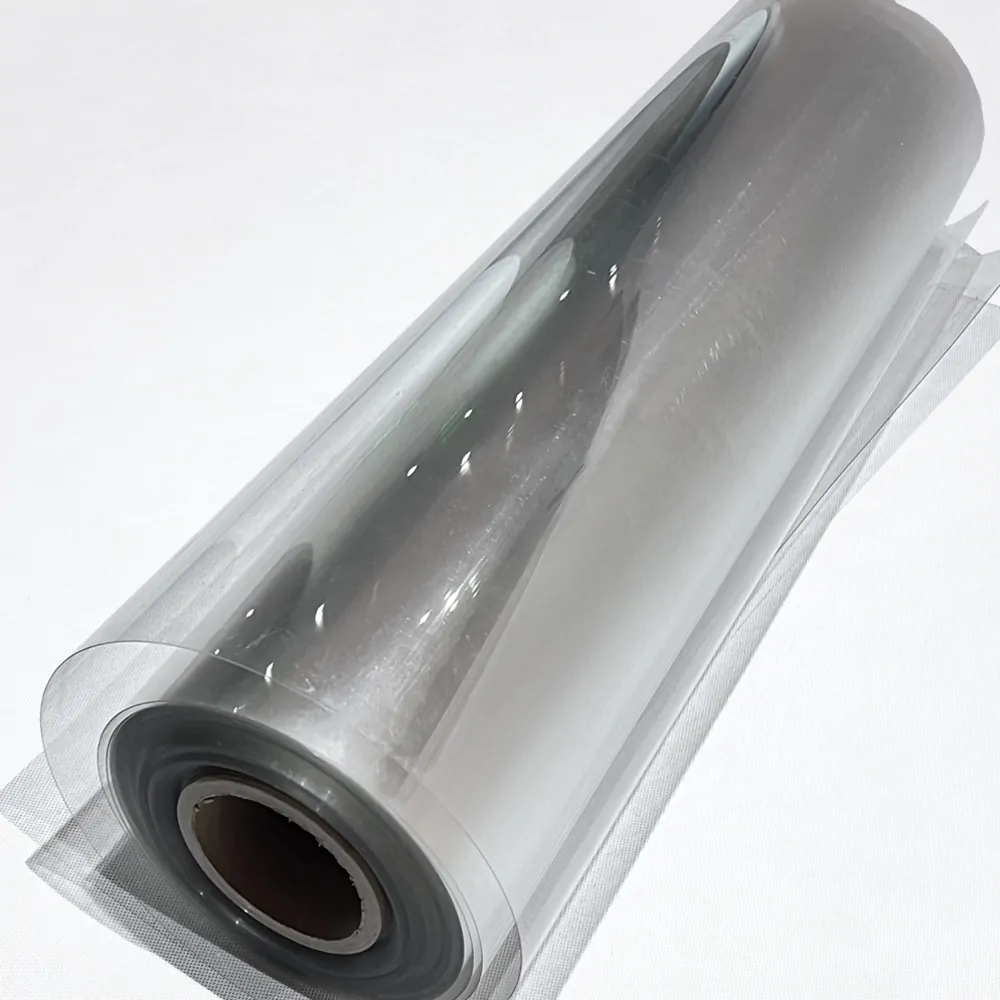
APET sheet is a clear, rigid plastic sheet made from amorphous polyethylene terephthalate. It is widely used for blister packaging, clamshells, food trays, clear lids, folding boxes, printed packaging, display products, and thermoformed trays.
For B2B buyers, the key question is not only "What is APET sheet?" The more important question is whether APET sheet is cost-effective for your own product, whether it matches your forming or printing process, and whether the supplier can support stable quality, stock, packing, and repeat orders.
This ONE PLASTIC guide explains APET sheet from a practical purchasing point of view. It combines product introduction, production information, workshop and stock checks, packing standards, product features, specification tips, material comparison, and inquiry guidance.
APET stands for amorphous polyethylene terephthalate. "Amorphous" means the polymer structure is non-crystalline, which helps the sheet stay clear, glossy, and easy to thermoform at relatively low temperatures.
APET is part of the PET material family. Compared with many brittle clear plastics, APET offers a useful balance of transparency, rigidity, impact resistance, thermoforming performance, and printability. Its main limitation is heat resistance: standard APET is not designed for ovenable, hot-fill, or long-term high-heat applications.
In simple B2B terms, APET sheet is usually chosen when a buyer needs clear, rigid, formable, and cost-controlled packaging material for standard packaging production.
Is APET Sheet Suitable for Your Product?
APET sheet is suitable when the finished product needs clarity, shape stability, clean forming, and attractive retail presentation. Common applications include:
Blister packaging
Clamshell packaging
Food trays and lids
Produce, bakery, and chilled-food packaging
Clear folding boxes
Printed packaging
Vacuum-formed trays and inserts
Display products
Protective covers and industrial components
APET may not be the best choice when the part requires ovenable heat resistance, hot-fill performance, very deep forming, or very high impact performance. For those applications, buyers may need CPET, PETG, GAG, or another engineering material.
How to Choose Cost-Effective APET Sheet for Your Product
Many buyers looking through social media want a material that is both cost-effective and suitable for their own product. For APET sheet, "cost-effective" does not mean choosing the lowest price per kilogram. It means choosing the sheet that runs smoothly on your machine, reduces scrap, protects the product, meets the destination-market requirement, and keeps the finished-piece cost under control.
Before comparing prices, confirm these points:
Buyer question
Why it matters
What to confirm
What product will be packed?
Different products need different rigidity, clarity, and surface behavior
Food tray, blister, clamshell, clear box, printed package, display part
How will the sheet be processed?
Thermoforming, printing, die-cutting, and folding need different sheet behavior
The format affects production efficiency and packing cost
Roll width, roll weight, core size, sheet size, pallet size
Does it need a special surface?
Special applications may need anti-fog, antistatic, matte, colored, or protective film
Surface requirement and end-use condition
What tolerance is acceptable?
Stable thickness helps reduce scrap and machine adjustment
Thickness, width, length, and tolerance range
If you are unsure, send ONE PLASTIC your target application, current material, thickness, size, forming method, and estimated order volume. The supplier can help recommend a suitable APET grade or a related PET material.
Product Introduction: What Buyers Should Look For
A useful product introduction should show more than a sheet name. Buyers should be able to see the sheet surface, transparency, flatness, roll condition, thickness range, and typical applications.
When reviewing APET sheet photos or videos, check:
Surface clarity and gloss
Sheet flatness and roll condition
Roll or cut-sheet format
Thickness and width options
Edge condition
Protective film requirement
Application examples such as trays, blisters, lids, boxes, and display packaging
For automated thermoforming factories,
PET sheet rollis often preferred because it can feed directly into production equipment.
Production Introduction: How APET Sheet Is Made
APET sheet is commonly produced by extrusion. The process usually includes material drying, melting, extrusion through a flat die, roller cooling, thickness control, trimming, inspection, winding, and packing.
A good production video should prove real manufacturing ability. It should show more than a running machine. For B2B buyers, the useful details are raw material preparation, extrusion line operation, thickness control, surface inspection, roll winding, and finished product handling.
Workshop view : What It Should Prove
Workshop view help buyers verify whether the supplier has real production conditions, organized factory management, and repeat-order capacity. For plastic sheet buyers, a workshop video should help answer practical questions:
Is the production line operating steadily?
Are rolls handled carefully after production?
Is the workshop organized for sheet manufacturing?
Are inspection steps shown during or after production?
Can the factory support custom thicknesses, widths, and repeat orders?
Workshop content is especially useful for buyers who first discover a supplier from social media. It turns a short video impression into supplier trust.
Key Product Features of APET Sheet
APET sheet is popular in packaging because it balances appearance, forming behavior, and cost. The final performance depends on grade, thickness, formulation, production batch, surface treatment, and application.
Feature
Why it matters
Buyer note
High transparency
Helps customers see the packaged product clearly
Useful for retail packaging, food trays, lids, and display boxes
Good rigidity
Supports trays, boxes, and formed parts
Choose thickness according to product weight and stacking need
Thermoforming behavior
Works for vacuum forming, pressure forming, and blister packaging
Run a machine trial for deep or complex molds
Printability
Supports printed packaging and display applications
Confirm surface treatment and ink compatibility
PET-family material
Can support recyclable-packaging programs
Actual recyclability depends on local collection and sorting
Custom options
Helps match existing production lines
Confirm size, surface, color, and tolerance before bulk order
APET vs PETG, RPET, GAG, and PVC
APET is one option in a larger plastic sheet family. Choosing the right material depends on the finished product, forming depth, sustainability requirement, price target, and processing method.
Material
Best fit
Watch out for
ONE PLASTIC page
APET sheet
Clear packaging, trays, blisters, folding boxes, standard thermoforming
Do not choose material only by unit price. For packaging production, the better comparison is cost per finished part, including scrap rate, forming stability, print result, packing protection, and compliance risk.
Specifications Buyers Should Confirm
The values below are typical reference points for standard APET grades. Actual performance depends on grade, thickness, formulation, and production batch. Always confirm final data with the supplier's datasheet and sample.
Property
Method
Unit
Typical reference
Density
ISO 1183
g/cm3
1.35
Water absorption
ISO 62
%
0.15
Tensile strength
ISO 527
MPa
53.5
Elongation at break
ISO 527
%
>100
Tensile modulus
ISO 527
MPa
~2600
Notched impact strength
ISO 180
kJ/m2
3.9
Rockwell hardness
DIN 2039
M / R
M80 / R114
Heat deflection temperature
ISO 75
C
Around 70
Vicat softening point
ISO 306
C
Around 78
Light transmission
ASTM D1003
%
82 to 89
For procurement, confirm:
Thickness and tolerance
Roll width, roll weight, core size, or sheet size
Clear, matte, anti-fog, antistatic, colored, or protective-film surface
Virgin APET, RPET, PETG, or GAG material route
Food-contact or destination-market requirement
Packing method and shipment protection
Sample approval and trial result
Specialty APET and PET Sheet Options
Some applications need more than standard clear APET sheet:
Quality control should focus on thickness consistency, surface cleanliness, optical clarity, roll condition, and packing protection. These details affect production stability and scrap rate on the buyer's line.
Food-contact APET grades are widely used in food packaging, but buyers should clearly state food-contact requirements and confirm the destination-market compliance before production.
APET belongs to the PET material family and can be recyclable where local PET collection and processing systems accept the product. It is not biodegradable. Actual recyclability depends on local collection, sorting, labels, adhesives, contamination, and recycling infrastructure.
Learn more about ONE PLASTIC's quality process:
Limitations of APET Sheet
A rigorous B2B guide should explain both advantages and limits.
Heat resistance: standard APET is not suitable for ovenable packaging, hot-fill packaging, or long-term high-heat use.
Deep forming: very deep draws, sharp corners, or demanding mold designs may require PETG or GAG.
Surface protection: like most clear plastic sheets, APET can be scratched during handling, so protective film or careful packing may be needed.
Compliance: food-contact, recycled-content, and destination-market requirements should be confirmed before bulk production.
Small Practical Tips Before Buying APET Sheet
To get an accurate quotation and avoid production problems, prepare real application details before asking for price.
Share the final application, such as food tray, blister, clamshell, clear box, or printed package.
Confirm whether you need rolls or cut sheets.
Provide target thickness, width, length, roll weight, core size, and tolerance.
Tell the supplier whether the sheet will be thermoformed, printed, die-cut, folded, or fabricated.
Confirm food-contact, anti-fog, antistatic, matte, colored, or protective-film requirements.
Request samples before bulk production if the mold, printing process, or packaging structure is new.
For high-heat applications, evaluate CPET or another heat-resistant material instead of standard APET.
Why Source APET Sheet from ONE PLASTIC?
ONE PLASTIC is a PET and PVC plastic sheet supplier based in Changzhou, Jiangsu, China. The company supplies APET sheet, PET sheet, PET sheet roll, PETG sheet, RPET sheet, GAG sheet, PVC sheet, and related plastic sheet products for packaging, printing, thermoforming, fabrication, and industrial applications.
For B2B buyers, ONE PLASTIC can support:
PET-family material comparison
APET sheet and PET sheet roll supply
Custom size, thickness, surface, and packing requirements
Sample support before bulk orders
Export packing for international shipments
Product pages, quality information, and contact access through the official website
Frequently Asked Questions
What is APET sheet?
APET sheet is a clear, rigid thermoplastic sheet made from amorphous polyethylene terephthalate. It is commonly used for blister packaging, clamshells, food trays, clear lids, folding boxes, printed packaging, and display products.
What is APET sheet used for?
APET sheet is used for thermoformed packaging, blister packs, clamshells, food containers, clear boxes, printed packaging, display trays, and protective covers.
Is APET sheet suitable for my product?
APET is suitable when your product needs clear, rigid, formable packaging material. It is not suitable for hot-fill or ovenable packaging, and very deep forming may need PETG or GAG.
Can APET sheet replace PVC?
APET can replace PVC in some clear packaging applications, especially when buyers need PVC-free or PET-family recyclable material. The best way to confirm is to compare cost per finished part and run a forming trial.
Can APET sheet be customized?
Yes. Thickness, width, sheet size, roll weight, surface, color, protective film, anti-fog, antistatic, matte finish, and some secondary processing options can be customized based on the project.
Is APET sheet food safe?
Food-contact APET grades are widely used in food packaging. Buyers should state food-contact requirements and confirm compliance for the destination market before production.
Can APET sheet handle high temperatures?
Standard APET has limited heat resistance and is not suitable for hot-fill or ovenable applications. For high-temperature packaging, buyers should evaluate CPET or another heat-resistant material.
How do I get an accurate APET sheet quote?
Send your application, thickness, roll or sheet size, surface requirement, forming method, packing requirement, destination market, and estimated order volume. This allows the supplier to recommend a suitable grade and quote more accurately.
Get an APET Sheet Quote from ONE PLASTIC
If you need APET sheet for thermoforming, food packaging, blister packaging, printing, clear boxes, or display products, send ONE PLASTIC your target specification and application details.