0.2mm and 0.25mm anti-fog PET sheet are the two most commonly specified thin-gauge anti-fog PET thicknesses. They cover the majority of anti-fog packaging lid applications, thin thermoformed trays, face shields, and converting-grade anti-fog sheet orders. This page is specifically for buyers who have narrowed down to 0.2mm or 0.25mm and want to understand which one fits their application.
This is not a broad anti-fog PET page. If you need a general overview of anti-fog PET as a material, see our main anti-fog PET sheet page. If you are specifically converting anti-fog PET for high-volume die-cutting of face shields, see our die cutting anti-fog PET sheet film variant. This page focuses on thickness selection between 0.2mm and 0.25mm - the two thin-gauge specifications most buyers choose between.
ONE PLASTIC manufactures anti-fog PET sheet on dedicated PET extrusion lines in both 0.2mm and 0.25mm, in roll or cut-sheet format, with one-side or two-side anti-fog treatment.
What 0.2mm and 0.25mm Anti-Fog PET Sheet Is
Both gauges share the same basic material construction:
Base PET Sheet: Amorphous PET (APET) substrate with high clarity (typically 88%+ light transmittance), good rigidity for thin-gauge applications, and reliable thermoforming behavior.
Anti-Fog Coating: A hydrophilic coating applied to one or both surfaces. The coating spreads condensation into an invisible water film rather than fog droplets, maintaining visibility through the sheet under refrigeration, breath exposure, or humid conditions.
Thin-Gauge Format: At 0.2-0.25mm, the sheet is stiff enough to handle and thermoform on automated packaging lines, but thin enough to cut cleanly on die presses, slit into narrow rolls, and form into shallow thermoformed shapes without excessive material cost.
The difference between 0.2mm and 0.25mm is not in the material formulation - it is in the sheet stiffness, shell rigidity of the finished formed part, and material cost per unit area. Both are widely stocked industry specifications.
Why Buyers Choose These Thin Gauges
Optimized for Packaging Lids: 0.2-0.25mm is the standard thickness range for thermoformed packaging lids used on food trays, containers, and cold-chain packaging. Thinner than 0.2mm is typically too flexible for reliable lid handling. Thicker than 0.25mm adds material cost without significantly improving lid function.
Compatible with Die-Cutting: Both thicknesses cut cleanly on die presses without excessive blade wear or cut-edge deformation. This is why these gauges are the standard choice for face shield manufacture and other die-cut anti-fog PET products.
Good Thermoforming Behavior: At 0.2-0.25mm, anti-fog PET forms predictably on standard vacuum and pressure forming equipment. The forming window is wide enough to accommodate typical food packaging line conditions.
Economical for High-Volume Production: Thin gauges minimize material cost per unit, which matters for high-volume packaging applications where even small per-unit cost differences affect total program cost.
Balanced Stiffness for Light Handling: Sheets are rigid enough to feed reliably through automated equipment and hold their shape as flat panels or formed lids, but flexible enough to be handled, cut, and assembled without damage.
Typical Applications for 0.2mm and 0.25mm Anti-Fog PET
Food Packaging Lids
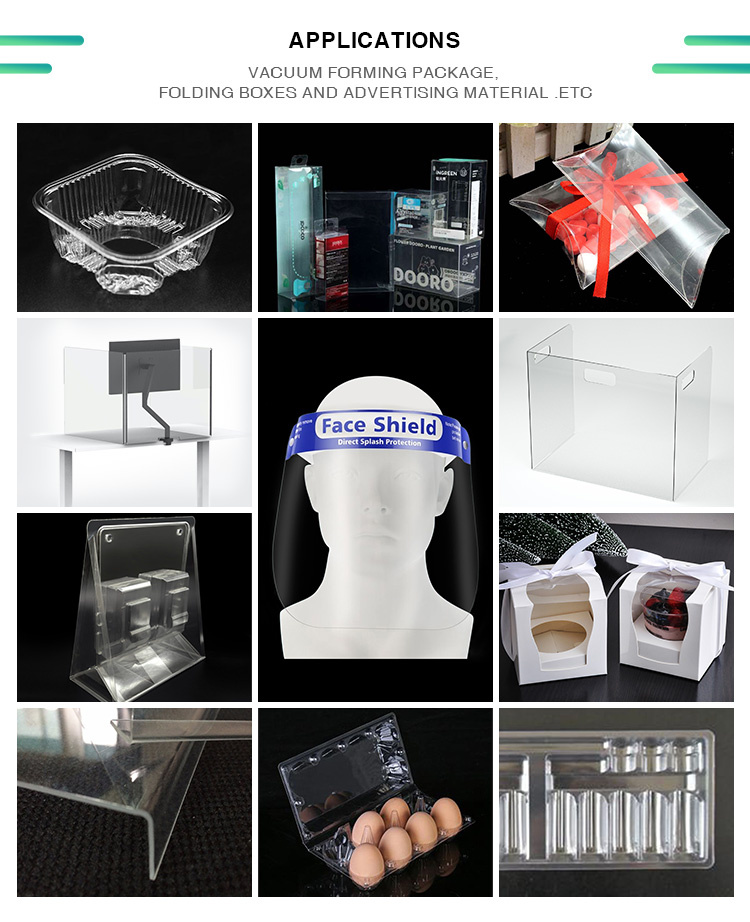
The largest application. Clear lids for fresh food trays, deli containers, salad boxes, bakery containers, and ready-meal packaging. The anti-fog property keeps the product visible through the cold-chain temperature transitions that cause standard clear plastic to fog on display.
Face Shields and Visors
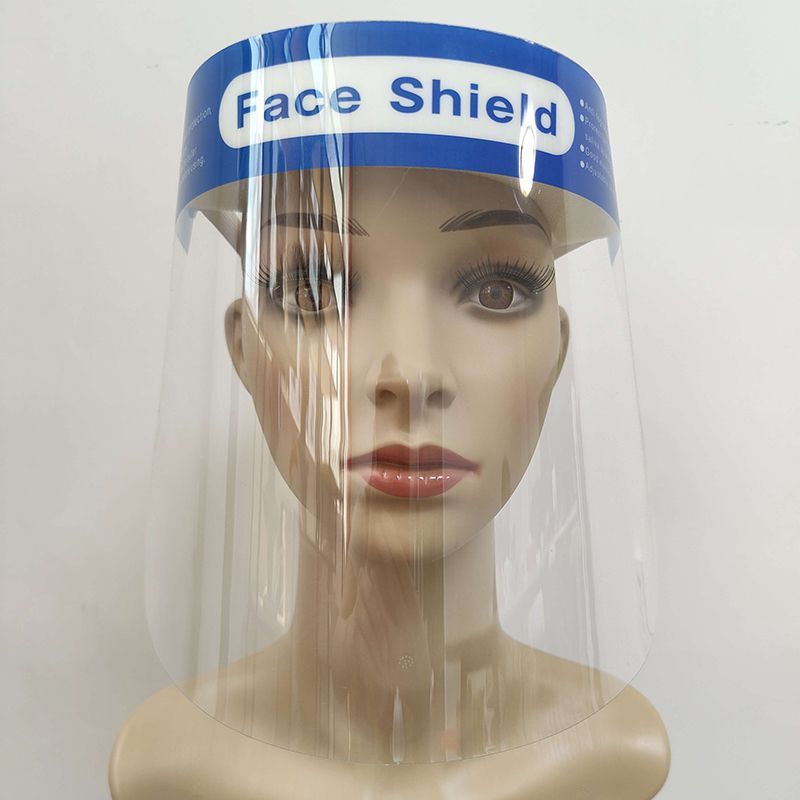
Die-cut face shields for medical, industrial, and consumer use. 0.2-0.25mm is the standard thickness range for face shield production because it balances impact resistance, flexibility for wearing, and die-cutting economy.
Thin Thermoformed Trays and Blisters
Shallow thermoformed trays, blister packaging, and formed covers where moderate rigidity is needed but heavy gauge would be wasteful.
Display and Visibility Covers
Refrigerated display case fronts, humid-environment signage, and any clear rigid overlay where condensation would otherwise hide the content underneath.
Protective Covers in Cold-Chain Equipment
Clear covers for refrigerator shelves, chilled display equipment, and cold-chain inspection windows where visibility is critical and standard PET fogs too readily.
0.2mm vs 0.25mm: How to Choose
Both thicknesses are widely used, but they are not interchangeable for every application. Here is how to decide:
Factor
0.2mm Anti-Fog PET
0.25mm Anti-Fog PET
Sheet Weight per m2
Lower
Slightly higher
Stiffness
Moderate - flexes more
Slightly stiffer - holds flat panels better
Thermoforming
Forms easily, good for shallow draws
Forms well, slightly better shell rigidity in finished part
Face shields, slightly heavier lids, converted parts that need more rigidity
Material Cost per Unit
Lower
Slightly higher
Quick selection guidance:
Choose 0.2mm when the finished part is a lid or cover handled briefly during packaging, and where minimum material cost per unit matters
Choose 0.25mm when the finished part is a face shield, die-cut item for repeated handling, or a lid that needs more shape stability
If you are unsure, request samples in both thicknesses for comparison on your specific process
For buyers converting large volumes for die-cut face shields specifically, see our die cutting anti-fog PET sheet film page, which covers stack-packed pre-slit supply format optimized for high-volume die press operations.
.
Sheet Size, Roll Supply, and Converting Options
Parameter
Specification
Base Material
Amorphous PET (APET)
Thicknesses
0.2mm, 0.25mm
Anti-Fog Treatment
One-side or two-side (specify at order)
Light Transmittance
Typically 88% or higher
Haze
Typically below 3%
Roll Width
300mm - 1400mm (slit to required width)
Standard Sheet Sizes
Custom cut to your required dimensions
Roll Core
3-inch (76mm) or 6-inch (152mm)
Supply Format
Roll, cut sheet, or pre-slit stacks for die-cutting
Food Contact
Food-contact grades available, subject to coating and formulation (contact us to confirm for your application)
Temperature Range
Approximately -8 C to +60 C for anti-fog performance
Recyclable
Yes - PET #1
Format selection:
Roll format - best for inline thermoforming lines and continuous packaging production
Cut sheet - practical for sheet-fed forming operations and smaller converting shops
Pre-slit stacks - optimized for high-volume die-cutting (see the dedicated die-cutting variant page)
How This Page Differs from Broad Anti-Fog PET and Die-Cutting Pages
The anti-fog PET cluster on our site is structured around buyer intent:
Converting-specific page - pre-slit, stack-packed supply format for high-volume die-cutting
If you have already decided on 0.2mm or 0.25mm and want thickness-focused selection help, this page is the right fit. If you need broader anti-fog PET material information, or if you have a specific converting-format requirement, the other two pages are better starting points.
Why Choose ONE PLASTIC?
Dedicated PET Extrusion Lines: We produce anti-fog PET on the same dedicated PET lines used for our virgin and recycled PET products. This means consistent thickness control and surface quality across both thicknesses.
Both 0.2mm and 0.25mm Stocked: We routinely produce both specifications, so lead time and MOQ are usually similar for standard specifications. You can order samples or small runs of both to compare on your process before committing to bulk.
One-Side or Two-Side Anti-Fog: We produce both configurations. One-side is more economical and suitable for packaging lids. Two-side is specified for face shields and applications where both surfaces face humidity.
Supply in Your Preferred Format: Roll, cut sheet, or pre-slit stacks depending on your production line setup.
ISO 9001 Certified: Routine batch testing is performed for thickness tolerance, haze, light transmittance, and surface quality. Test reports are available on request.
Custom Specifications: Beyond 0.2mm and 0.25mm, we produce other anti-fog PET thicknesses. If you need a different gauge alongside your main order, we can consolidate.
Frequently Asked Questions
Can I use the same machine for both 0.2mm and 0.25mm?
Yes. Both thicknesses run on standard PET thermoforming and die-cutting equipment. Minor adjustments to forming temperature or die press pressure may be needed when switching between the two, but no equipment changes.
Is 0.2mm too thin for face shields?
0.25mm is commonly preferred for many standard face shield designs because it provides better shape retention when worn. 0.2mm can be used but may feel slightly flexible for extended wear. If you are producing budget face shields or visors where weight and material cost are priority, 0.2mm works. For standard or premium face shields, 0.25mm is typically the more common choice.
Does anti-fog performance differ between 0.2mm and 0.25mm?
No. The anti-fog coating formulation and application are the same across thicknesses. The only difference is sheet gauge. Anti-fog performance, light transmittance, and haze are comparable between the two.
Is this sheet food-safe?
Food-contact grades are available, but suitability depends on the specific anti-fog coating formulation, the food type, and the regulatory region. Contact us with your specific application - including food type, contact temperature, and target region (FDA, EU, etc.) - and we can confirm which grade is appropriate.
Can I get these thicknesses with two-side anti-fog?
Yes. Both 0.2mm and 0.25mm can be produced with one-side or two-side anti-fog treatment. Specify at the time of order based on your application - one-side is typical for packaging lids, two-side for face shields and covers where both surfaces are exposed to humidity.
What is the minimum order quantity?
MOQ depends on thickness, width, coating configuration, and supply format. Contact us with your specific requirements for a quote.
Can you supply other anti-fog PET thicknesses?
Yes. While 0.2mm and 0.25mm are the most commonly ordered, we produce anti-fog PET across a wider thickness range. If your application requires a non-standard gauge, let us know at the time of inquiry.
Get a Quote
Looking for 0.2mm or 0.25mm anti-fog PET sheet?
Specify Thickness - 0.2mm, 0.25mm, or both for comparison
Specify Format - Roll, cut sheet, or pre-slit stacks
Specify Anti-Fog Configuration - One-side or two-side treatment
Request Samples - Evaluate clarity, anti-fog performance, and forming or cutting behavior before bulk order