Confused between PET and PVC for your next thermoforming run? You're not alone. This guide breaks down every key difference — so you can stop second-guessing and start ordering.
Introduction: The Choice That Keeps Buyers Up at Night
Whether you're sourcing material for clamshell packaging, blister trays, or vacuum-formed display inserts, sooner or later you'll face the same question: PET or PVC?
Both are clear, rigid thermoplastics. Both thermoform well. Both are widely used across food packaging, retail, and electronics industries. So what actually sets them apart — and which one is right for your project?
This guide gives you a straight answer. We'll compare PET vs. PVC sheet across six critical dimensions — transparency, thermoforming performance, environmental impact, chemical safety, impact resistance, and price — and tell you exactly when to use each.
What Is PET Sheet? (And What Are APET vs. PETG?)
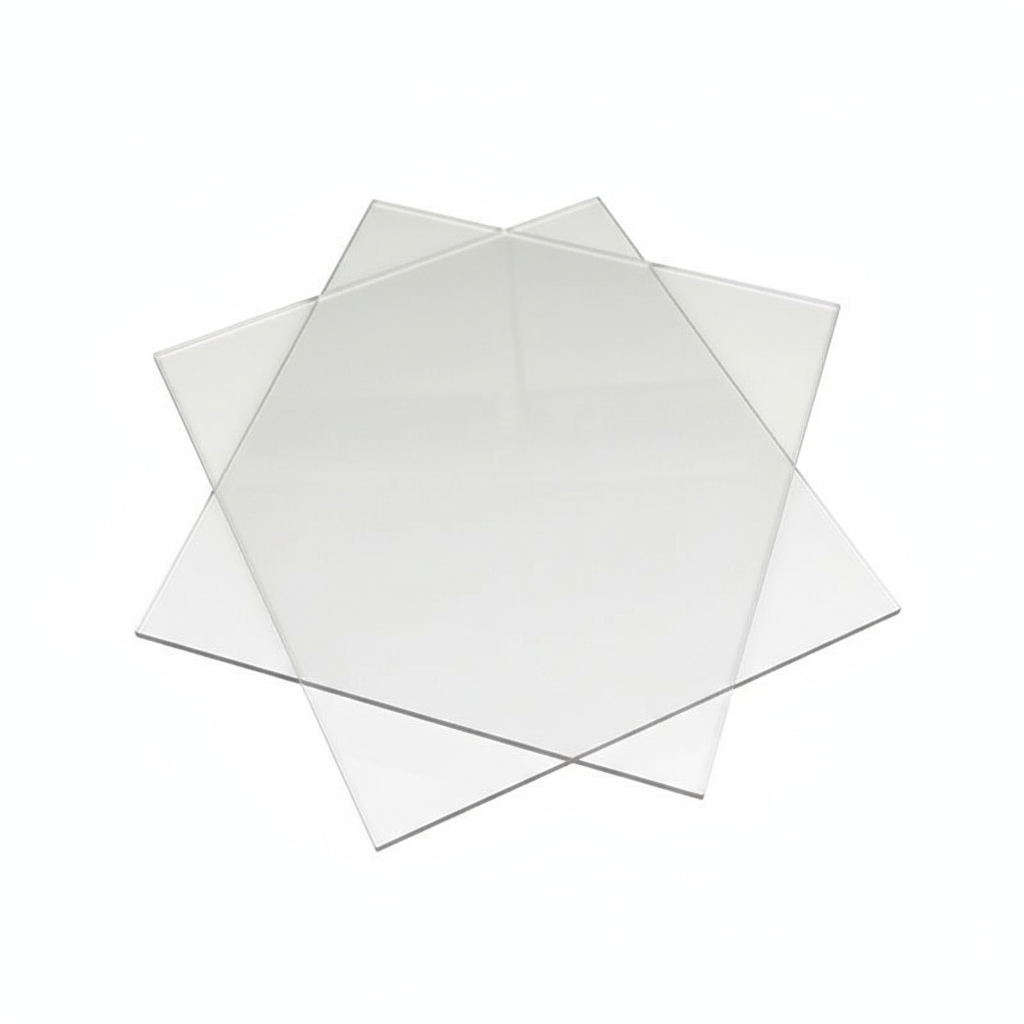
PET stands for Polyethylene Terephthalate, one of the most widely used thermoplastics in the world. In rigid sheet form, it comes in two main variants:
APET (Amorphous PET) is the most common type used in thermoforming. It remains amorphous (non-crystalline) during processing, which is what gives it that outstanding glass-like clarity. ONE PLASTIC's APET sheet achieves a light transmission rate of up to 89%, making it the go-to choice for premium food packaging, medical trays, and high-end retail blister packs.
PETG is a modified version of PET where glycol is added to the polymer chain. This modification makes PETG softer, easier to form at lower temperatures, and more impact-resistant than standard APET — but it sacrifices some heat resistance and rigidity. It's popular for point-of-sale displays, medical device packaging, and applications where complex 3D geometries are required. Explore ONE PLASTIC's PETG sheet options if your project demands tighter draw ratios or deep-draft forming.
What Is Clear Rigid PVC Sheet?
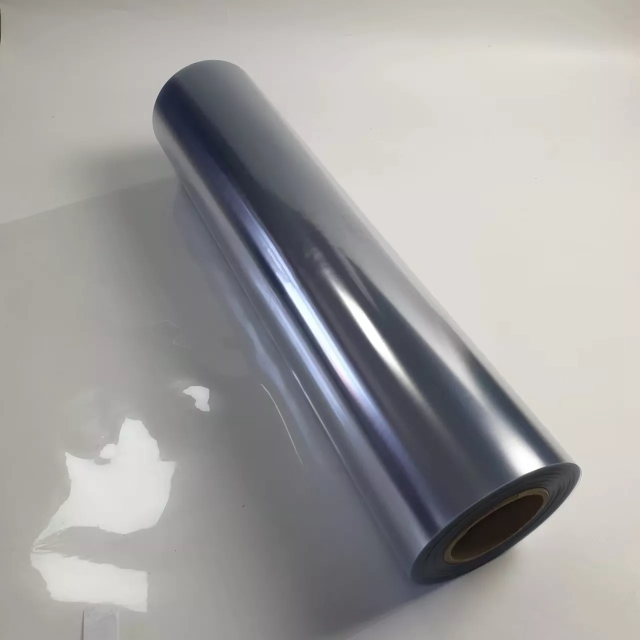
PVC (Polyvinyl Chloride) has been the workhorse of the thermoforming industry for decades. Clear rigid PVC sheet is cost-effective, easy to process, and performs reliably on a wide range of thermoforming equipment. It has a lower forming temperature than PET, forgiving processing windows, and excellent surface gloss for printed graphics.
PVC sheet is widely used in blister packaging for pharmaceuticals, stationery, cosmetics, toys, and seasonal retail products. ONE PLASTIC's PVC sheet for vacuum forming is engineered for consistent wall thickness and uniform forming behavior, making it a reliable choice for high-volume production runs.
The trade-off? PVC contains chlorine, and when incinerated, it can release hydrogen chloride gas — a concern in markets with strict environmental or recycling regulations.
PET vs. PVC Sheet: Head-to-Head Comparison Table
| Property | PET Sheet (APET/PETG) | Clear Rigid PVC Sheet |
| Transparency | ⭐⭐⭐⭐⭐ Up to 89% light transmission | ⭐⭐⭐⭐ Good clarity, slight blue tint |
| Thermoforming Temp. | 130–160°C (narrower window) | 100–130°C (wider, more forgiving) |
| Impact Resistance | ⭐⭐⭐⭐⭐ Excellent (no burst on ISO 180) | ⭐⭐⭐ Good for standard applications |
| Chemical Resistance | ⭐⭐⭐⭐⭐ Excellent | ⭐⭐⭐⭐ Good |
| Environmental Profile | ✅ Recyclable (Resin Code #1), no chlorine | ⚠️ Recyclable but contains chlorine |
| Food Safety / FDA | ✅ FDA compliant, widely used in food contact | ✅ FDA compliant grades available |
| Heat Resistance | Higher (HDT ~70°C at 0.45 MPa) | Lower (softer at elevated temps) |
| Price | Higher (15–30% premium over PVC) | Lower — best value for cost-sensitive projects |
| Market Acceptance (EU/US eco regs) | ✅ Preferred in sustainability-mandated markets | ⚠️ Facing restrictions in some regions |
| Typical Applications | Food containers, medical packaging, premium retail | Pharma blisters, stationery, cosmetics, toys |
Deep Dive: 6 Factors That Should Drive Your Decision
1. Optical Clarity: PET Wins
If crystal-clear presentation is your priority — think supermarket fruit trays, electronics inserts, or luxury cosmetics packaging — PET is the clear winner. With a transparency rate of up to 89%, APET sheet delivers a glass-like finish that makes products look premium on shelf. PVC is no slouch in clarity, but it often carries a faint blue or grey tint that becomes noticeable in side-by-side comparisons.
2. Thermoforming Ease: PVC Has the Edge
PVC has a wider and more forgiving forming window. It tolerates variations in mold temperature and cycle time better than PET, which requires more precise temperature control to avoid crystallization (which turns the sheet white and unusable). For factories with older thermoforming equipment or operators who are new to PET, PVC's processing forgiveness can save significant scrap costs. That said, with modern equipment and proper calibration, APET thermoforms beautifully and produces sharper detail.
3. Environmental & Regulatory Compliance: PET is the Future
This is arguably the most important deciding factor for 2025 and beyond. PET carries resin identification code #1 and is one of the most recycled plastics globally. It contains no chlorine, no plasticizers, and generates no HCl emissions during incineration. RPET (recycled PET) is widely accepted by brands committed to post-consumer recycled content targets. ONE PLASTIC also supplies RPET plastic sheet for clients pursuing circular economy certifications or sustainability mandates from major retailers.
PVC, while technically recyclable, is not accepted in many municipal curbside recycling programs and faces increasing restrictions in the EU under Single-Use Plastics directives. If your end-customers are in the EU, UK, or California, the regulatory trend is clearly moving away from PVC for consumer-facing applications.
4. Impact Resistance & Toughness: PET Leads
APET sheet shows "no burst" on the ISO 180 unnotched impact test — meaning it absorbs energy extremely well before failing. This makes it the preferred choice for packaging delicate electronics, medical devices, or any product that's likely to be dropped or shipped long distances. PVC impact performance is adequate for most everyday packaging, but it can crack or shatter under severe impact at low temperatures.
5. Chemical Resistance: Both Are Good, PET is Slightly Better
Both materials resist common solvents, oils, and weak acids well. PET has a slight edge in long-term chemical stability, particularly for food and pharmaceutical applications where migration of additives or residual solvents is a concern. For food-contact packaging, PET's clean chemistry and wide FDA compliance makes it the preferred choice globally.
6. Price: PVC Wins on Cost
PVC sheet consistently costs 15–30% less than equivalent-gauge PET sheet. For high-volume, price-sensitive applications — think promotional blister packs, seasonal retail packaging, or budget stationery — PVC delivers excellent value without sacrificing the clarity or forming performance needed for the job. If you're running millions of units per year where material cost is the primary lever, PVC's economics are hard to beat.
APET vs. PETG: Which PET Variant Should You Choose?
Since both APET and PETG are PET-based, buyers often ask which to choose. Here's a quick rule of thumb:
Choose APET when you need maximum clarity, higher rigidity, better heat resistance, and lower raw material cost. APET is the standard choice for food packaging, pharmaceutical blisters, and most thermoformed trays.
Choose PETG when you need to form complex, deep-draw shapes, require extra toughness at low temperatures, or want better compatibility with adhesives and inks. PETG is also preferred for medical device packaging where sterilization compatibility matters.
ONE PLASTIC offers both variants — explore the full PET plastic sheet range including APET, PETG, GAG, and RPET grades to find the right specification for your project.
The Verdict: Which Should You Choose?
Here's the simple decision framework:
Choose PVC sheet if:
Cost per unit is your primary driver
You're producing high-volume commodity packaging (pharma blisters, stationery, seasonal retail)
Your customers are in markets with no specific sustainability mandates
Your thermoforming equipment is better suited to lower processing temperatures
Lead time and price stability are more important than eco-credentials
Choose PET sheet if:
Optical clarity and premium shelf appeal matter
You're packaging food, medical products, or other items where clean chemistry is required
Your buyers or retail partners have sustainability or recyclability requirements
You need superior impact resistance for protective packaging
You're targeting EU, UK, or US markets where environmental regulations are tightening
The good news? You don't have to pick just one supplier. ONE PLASTIC manufactures both high-quality PET plastic sheets and clear rigid PVC sheets from our ISO 9001-certified factory in Changzhou, China. Whether your project calls for economy-grade PVC or premium food-contact APET, we can quote both options so you can make an informed decision based on real pricing — not guesswork.
Get Samples and a Quote from ONE PLASTIC
ONE PLASTIC has supplied plastic sheet material to 300+ clients across 50+ countries. Our 10 PET extrusion lines give us a monthly capacity exceeding 5,000 tons, and our integrated QC system means every roll is tested before it ships.
Not sure which grade is right for your application? Contact our technical team or request a free sample to test in your thermoforming line before committing to a full order. We're here to help you make the right call — whatever material it turns out to be.

 English
 Русский
 العربية
 Français
 Español
 Português
 Deutsch
 italiano
 日本語
日本語 한국어
한국어 Nederlands
 Tiếng Việt
 ไทย
ไทย Polski
 Türkçe
 አማርኛ
አማርኛ ພາສາລາວ
 ភាសាខ្មែរ
 Bahasa Melayu
 ဗမာစာ
ဗမာစာ தமிழ்
தமிழ் Bahasa Indonesia
 magyar
 Română
 Čeština
 Монгол
 Српски
 हिन्दी
 فارسی
فارسی Kiswahili
 Slovenčina
 Norsk
Norsk Svenska
 Suomi
Suomi Dansk
Dansk اردو
اردو বাংলা
বাংলা සිංහල
සිංහල Беларуская мова
 Български
 Hausa
Hausa Igbo
Igbo Basa Jawa
 ಕನ್ನಡ
ಕನ್ನಡ മലയാളം
 Afaan Oromoo
 ਪੰਜਾਬੀ
 Soomaali
 Basa Sunda
 తెలుగు
 संस्कृत
 Yorùbá


