Why Your Plastic Substrate Choice — and Surface Treatment — Make or Break Every Print Job
Introduction: The Problem No One Talks About Until It's Too Late
You've invested in premium UV inks. Your press is calibrated. The color profile is dialed in. But when the job comes off the machine, the ink beads up, smears, or peels at the score line. The client calls. The job gets reprinted. Margins evaporate.
If this scenario sounds familiar, the problem almost certainly isn't your ink, your press, or your operator. It's the substrate. Specifically, it's what the substrate's surface looks like at the molecular level — and whether it's been properly prepared to accept ink.
Printing on rigid plastic sheets — whether clear PVC sheet for folding cartons and box windows, or corona-treated PET film for premium packaging overlaminates — requires a fundamentally different mindset than paper printing. In this guide, we break down the surface science, the critical pre-treatment processes (corona treatment, anti-static handling, and more), and what to look for when specifying a printable plastic sheet supplier who actually understands your workflow.
Why Plastic Surfaces Resist Ink by Default
To understand why surface treatment matters, you need to understand surface energy.
Paper is a naturally ink-receptive substrate. Its fibrous, porous surface has high surface energy — ink spreads easily and bonds at the molecular level. Plastic is the opposite. The molecular surface of untreated PVC or PET is smooth, non-porous, and has low surface energy — typically in the range of 30–36 mN/m. Standard offset and UV inks require a substrate surface energy of at least 38–42 mN/m to wet out and adhere properly.
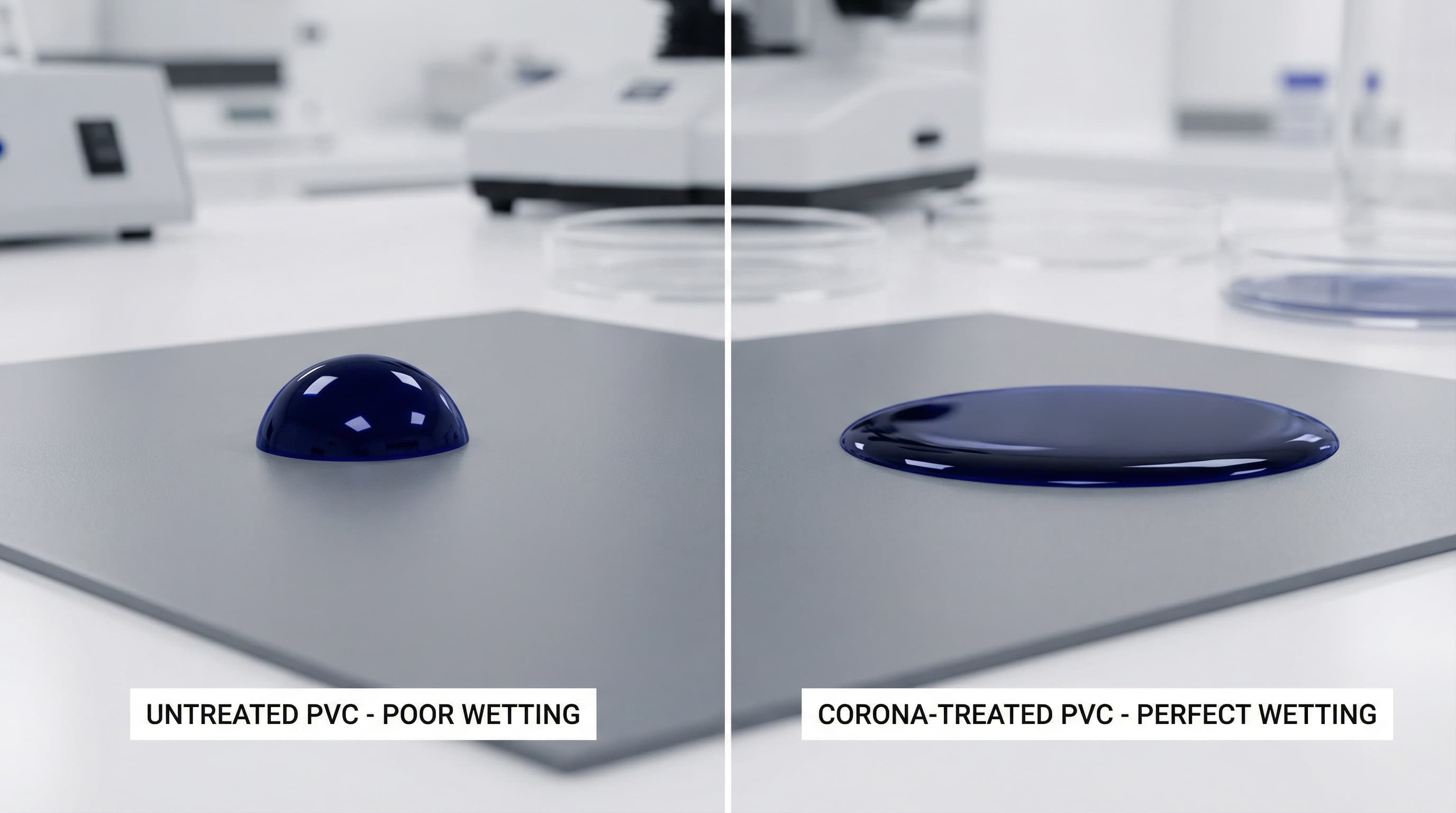
Put untreated plastic under the ink train and you get one of three outcomes: ink crawls and beads (poor wetting), ink transfers but lifts on the delivery pile (poor adhesion), or ink cracks at fold lines on finished cartons (poor flexibility bond). None of these are acceptable in a commercial print environment.
The solution is surface pre-treatment — and corona treatment is the industry standard.
Corona Treatment: The Essential Pre-Treatment for Printable Plastic Sheets
What Corona Treatment Actually Does
Corona treatment works by passing the plastic film or sheet through a high-frequency electrical discharge — a corona — generated between an electrode and a grounded roll. The discharge creates a plasma field that bombards the surface of the plastic with electrons and ions at high energy.
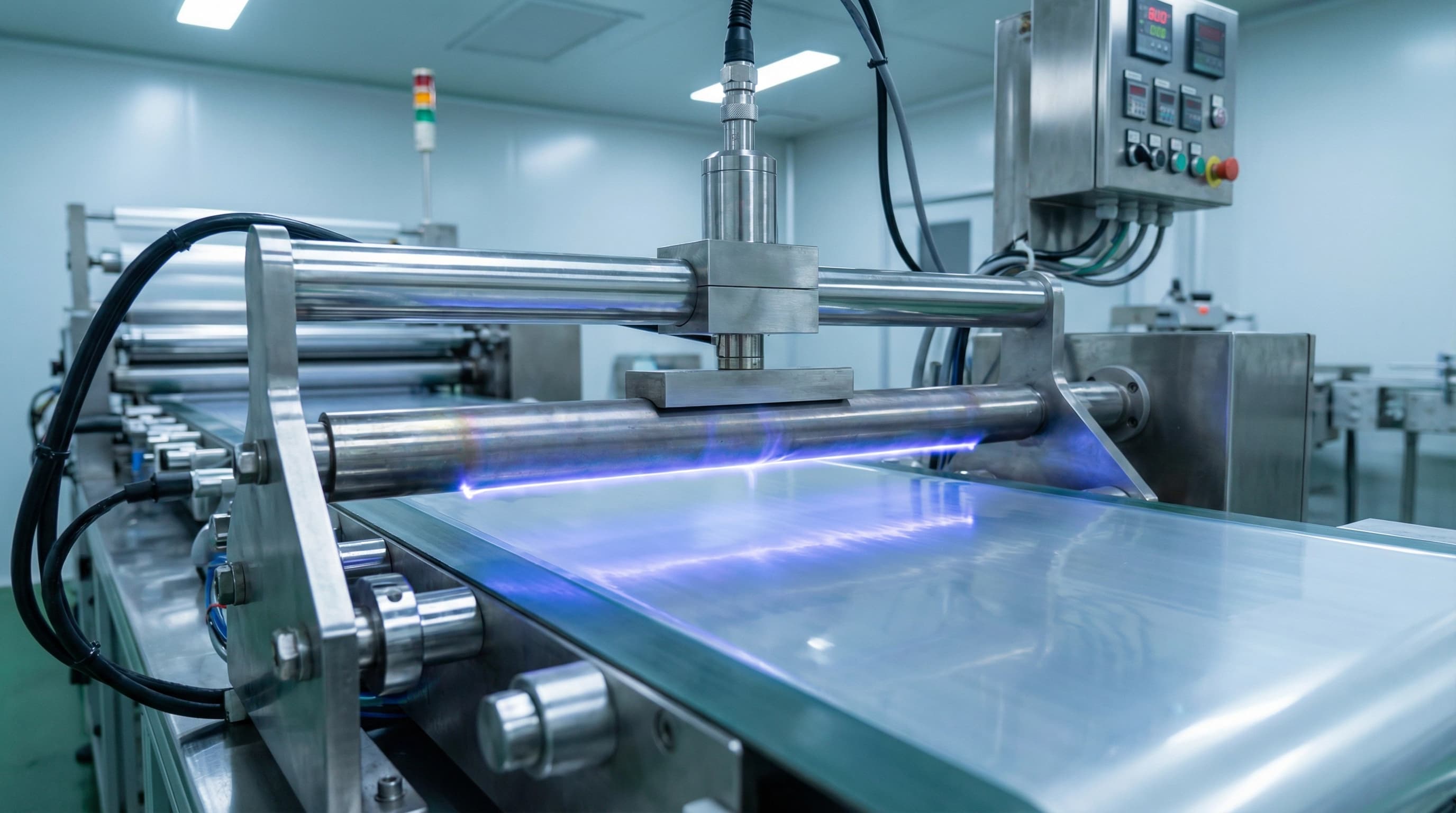
This does two things at the molecular level. First, it oxidizes the surface, introducing polar functional groups (carbonyl, carboxyl, and hydroxyl groups) onto the polymer chains. These polar groups dramatically increase surface energy, typically raising it from 32–36 mN/m on untreated PVC to 44–52 mN/m after treatment. Second, it microscopically roughens the surface, increasing mechanical adhesion sites for ink.
The result: ink wets out completely, bonds firmly, and stays bonded through lamination, folding, and downstream converting operations.
Corona Treatment Levels for Printing Applications
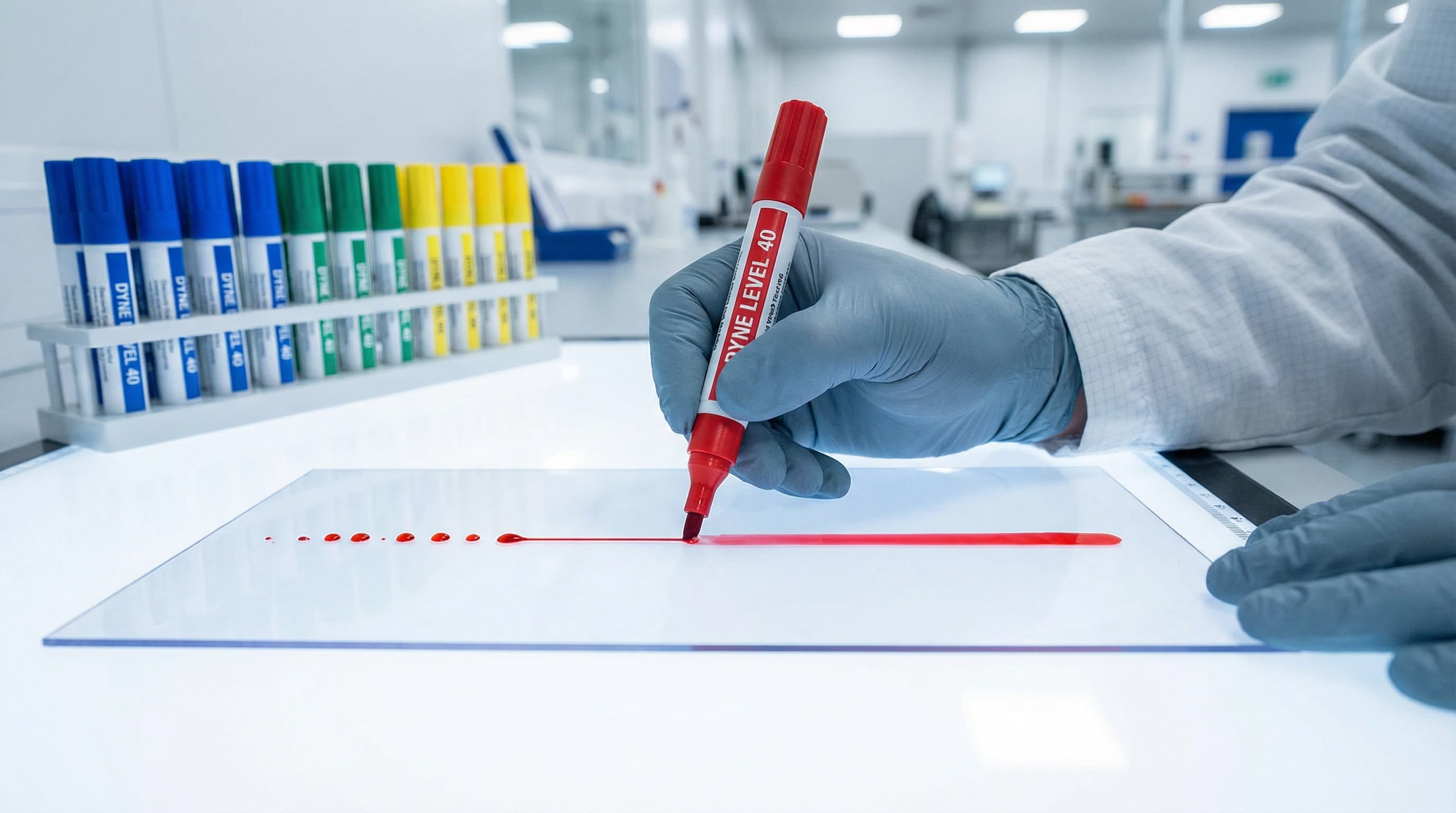
Not all corona treatment is equal. The treatment level is measured in dyne/cm (equivalent to mN/m) using dyne test pens or inks. As a general guide for offset and UV offset printing on rigid plastic:
| Application | Minimum Surface Energy Required |
| Solvent-based screen printing on PVC | 38 dyne/cm |
| UV offset on rigid PVC sheet | 42 dyne/cm |
| Water-based flexo on PET film | 44 dyne/cm |
| High-adhesion UV on APET/PETG sheet | 48 dyne/cm |
| Lamination bonding over print | 50+ dyne/cm |
At ONE PLASTIC, our PVC clear sheets designated for printing applications are produced with controlled surface energy levels verified batch by batch. If your application requires a specific dyne level, specify it at the time of order — we can tailor treatment intensity accordingly.
The Corona Treatment Decay Problem — and How to Manage It
Here's something many printers discover the hard way: corona treatment is not permanent. Surface energy decays over time as treated surfaces re-orient their polymer chains back toward lower-energy configurations — a process accelerated by heat, humidity, contamination, and extended storage.
The practical implication: a sheet that tested at 46 dyne/cm when it left the factory may drop to 38–40 dyne/cm after 30–60 days of storage, particularly if stored in warm, humid conditions or wound tightly in a roll where layers press against each other.
Best practices for maintaining corona treatment integrity:
Order to print lead times — aim to print within 30 days of receiving treated substrate. For long-lead projects, specify later ship dates rather than holding treated stock.
Storage conditions — store corona-treated sheets at 15–25°C and 40–60% RH, away from UV light exposure, ozone sources, and chemical vapors.
Re-treatment on press — many offset and flexo presses can be fitted with in-line corona treaters. For high-specification jobs, in-line treatment is the most reliable way to guarantee consistent surface energy at the point of ink transfer.
Dyne testing before printing — build a 2-minute dyne pen test into your job setup checklist. It costs nothing and can save an entire run.
Anti-Static Treatment: The Other Half of the Equation
Corona treatment raises surface energy. But it also — as a side effect — increases the static charge on the sheet surface. And static is the enemy of clean offset printing on plastic.
How Static Causes Print Defects on Rigid Plastic
Static buildup on rigid plastic sheets causes three categories of problems in a print environment. Sheet feeding problems occur when electrostatically charged sheets cling together in the feeder pile, causing doubles and misfeeds. Ink distribution issues arise when static disrupts ink film uniformity across the plate and blanket. Contamination attraction happens when statically charged sheets attract airborne paper dust, lint, and fibers, which embed in the wet ink surface and cause hickeys and spots.
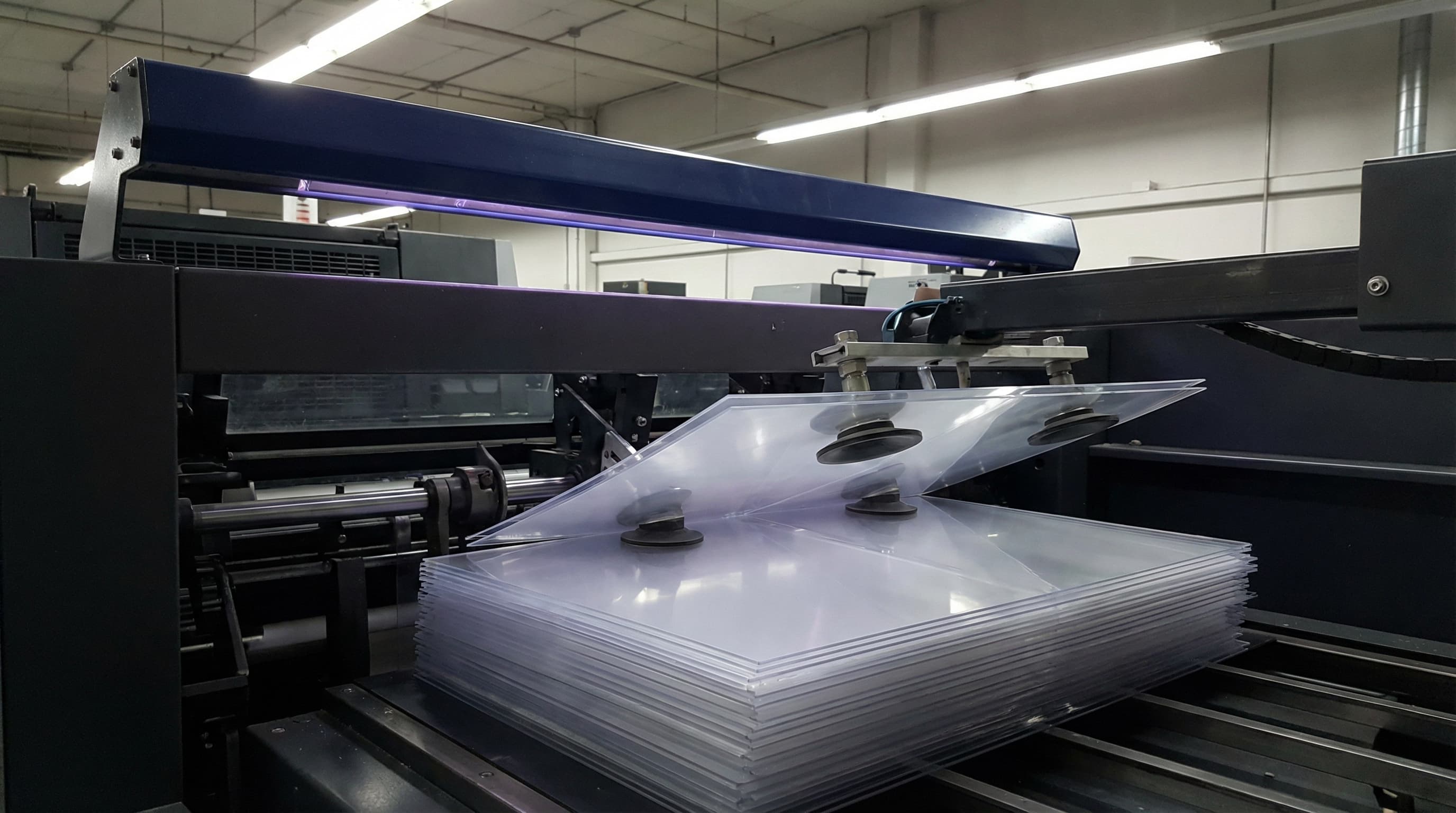
The problem is compounded on rigid PVC for offset printing because PVC is an excellent insulator — static charges accumulate and dissipate slowly, especially in low-humidity pressroom environments.
Anti-Static Solutions for Plastic Sheet Printing
There are several approaches to managing static on printable plastic substrates:
Anti-static coating at source — the most reliable solution is a plastic sheet that has been manufactured with an anti-static additive or surface coating. ONE PLASTIC offers anti-static grades of our clear PVC sheet specifically developed for printing applications. The permanent anti-static treatment is incorporated into the surface layer during calendering, providing stable charge dissipation that does not decay with storage.
Pressroom ionizing bars — in-line ionizing bars (static eliminators) mounted at the sheet feeder, delivery, and pile are standard equipment on any press running rigid plastic. They neutralize charge build-up continuously during the press run.
Pressroom humidity control — maintaining pressroom RH above 45–50% significantly reduces static build-up on plastic. Below 40% RH, static on insulating substrates becomes difficult to control regardless of other measures.
Anti-static sprays — a pragmatic short-term solution for occasional plastic jobs. Apply lightly and allow to fully dry before feeding. Note: some spray formulations can affect ink adhesion if over-applied.
PVC Sheet for Offset Printing: Material Selection Guide
Not all PVC sheet is created equal for printing. The calendering process, resin grade, plasticizer content, and surface finish all affect how the sheet behaves under the ink train.
Key Properties to Specify for Offset-Grade PVC
Thickness tolerance — rigid PVC for offset printing typically runs 0.20–0.50mm for folding carton windows and overlaminates, up to 0.80mm for rigid box construction. Tight thickness tolerance (±0.02mm) is critical for consistent ink impression across the sheet.
Surface smoothness (Ra value) — for offset work, specify a low Ra (roughness average) surface on the print side. A smoother surface gives cleaner halftone dot reproduction and higher gloss. ONE PLASTIC's printing-grade PVC sheets are produced with a polished roll surface on the print side.
Plasticizer migration — some PVC formulations contain higher levels of plasticizer to improve flexibility for thermoforming. Excess plasticizer migration to the surface can contaminate the ink film and cause adhesion failure over time. For print-first applications (where the sheet is printed before any thermoforming), specify low-migration or plasticizer-free PVC grades.
Shrinkage consistency — sheets with inconsistent extrusion or calendering can exhibit differential shrinkage under press impression, causing misregister on multi-colour work. Look for suppliers with validated process controls and batch-level dimensional testing.
ONE PLASTIC's PVC Sheet for Folding Box is specifically engineered for the print-then-fold workflow — optimized surface, low plasticizer migration, consistent flatness, and available with printing-grade corona treatment pre-applied.
Corona-Treated PET Film for High-End Printing Applications
While PVC dominates the folding carton and blister insert segments, corona-treated PET film is increasingly the material of choice for premium print applications where optical clarity, dimensional stability, and recyclability are priorities.
Why PET Outperforms PVC in Demanding Print Environments
PET's inherent molecular structure gives it several advantages over PVC in print applications. Dimensional stability under heat is higher — PET maintains its dimensions at press temperatures that can cause PVC to soften slightly and shift register on long print runs. Chemical resistance is superior — PET is less susceptible to ink solvent attack, making it compatible with a broader range of UV cure chemistry. And for brands targeting EU markets with sustainability credentials, PET's chlorine-free composition and widely accepted recyclability (resin code #1) is an increasingly important specification.
Corona-Treated PET Film: What to Look For
For printing-grade PET, the same surface energy principles apply as with PVC, but the baseline surface energy of untreated PET (approximately 41–44 mN/m) is somewhat higher than untreated PVC, which means PET is somewhat more naturally receptive to ink. However, corona treatment is still required for reliable adhesion in demanding offset and UV offset applications.
Key specifications for corona-treated PET film for printing:
Treatment level — minimum 48 dyne/cm for UV offset; 50+ dyne/cm for lamination-over-print applications.
Treatment uniformity — cross-web variation in treatment level should be within ±2 dyne/cm. Uneven treatment causes banding in ink lay-down.
Gauge consistency — for multi-up work on sheet-fed offset, thickness variation across the sheet must be tightly controlled. Specify ±0.01mm tolerance for critical register work.
Clarity specification — for packaging where the substrate shows through to the product, haze value matters. Specify maximum haze percentage for your application.
ONE PLASTIC's APET sheet achieves up to 89% light transmission with excellent surface uniformity, and is available with printing-grade surface treatment on request. Contact our technical team with your specific dyne level, ink system, and end-use requirements for a tailored recommendation.
Troubleshooting Common Ink Adhesion Problems on Plastic Sheets
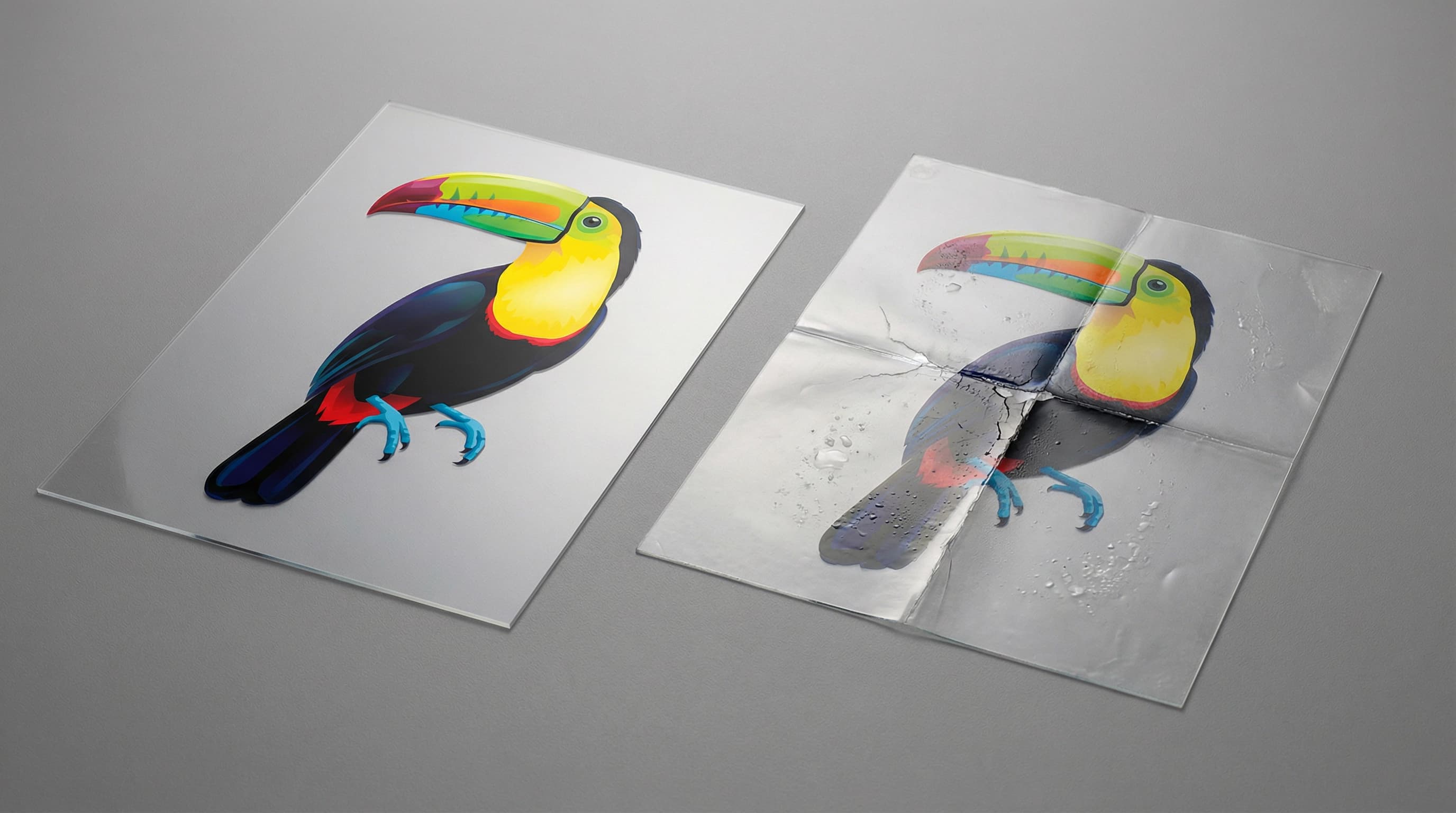
Even with correctly specified, properly treated substrate, print problems occur. Here's a quick diagnostic guide:
Ink beading / crawling on press — almost always a surface energy problem. Test the substrate with dyne pens before printing. If below 40 dyne/cm, the sheet has either lost treatment through storage or was inadequately treated at source. Solution: in-line corona treatment or return the batch.
Ink adhesion passes cross-hatch test but fails at fold — the ink film is adhering to the substrate surface but not flexing with it at the score. This is either an ink formulation issue (insufficient plasticizer in the ink for flexible substrates) or a PVC grade issue (sheet too rigid or too crystalline for the forming operation). Consult your ink supplier for a flexible UV formulation and specify a printing-then-forming PVC grade.
Ink adhesion good initially but degrades after 48–72 hours — classic plasticizer migration symptom. The plasticizer from the PVC is slowly migrating to the surface and softening the ink bond. Switch to a low-migration PVC formulation.
Static causing misfeeds or hickeys — check pressroom RH (target 45–55%), verify ionizing bar operation, and consider switching to an anti-static grade substrate for repeat jobs.
Color shifts between sheets in the same job — may indicate inconsistent corona treatment across the sheet width. Ask your supplier for cross-web dyne level data on the batch.
Why Choosing the Right Printable Plastic Sheet Supplier Matters
The difference between a plastic sheet supplier who understands printing and one who doesn't comes down to process control and communication.
A printing-knowledgeable supplier will provide dyne level certification with each batch, offer printing-specific grades distinct from thermoforming grades, be able to discuss plasticizer content and migration risk, maintain consistent surface quality batch-to-batch, and respond technically when you describe a print problem — not just offer a price reduction.
ONE PLASTIC works with printing customers across folding carton, pharmaceutical blister, retail display, and specialty graphics applications. Our ISO 9001-certified quality system includes surface energy verification in our outgoing QC process, and our technical team can advise on material selection across our full range — from offset-grade PVC clear sheet to corona-treated APET film — based on your specific ink system, press configuration, and end-use requirements.
Conclusion: Get the Substrate Right First
Ink adhesion on plastic is a substrate problem before it's an ink problem or a press problem. The decisions that determine whether your print job succeeds or fails are made upstream — when you specify the material, when you confirm the surface treatment level, and when you verify that treatment integrity has been maintained through storage and handling.
For printers looking to run consistent, high-quality work on rigid plastic substrates, the checklist is straightforward: specify printing-grade material, confirm corona treatment at the correct dyne level for your ink system, manage anti-static from feeder to delivery, test before you print, and work with a supplier who can speak your language technically.
If you're evaluating plastic sheet suppliers for your next print project, request a sample from ONE PLASTIC and put our printing-grade PVC and PET sheets through your own press qualification. We'll provide full surface treatment data and technical support throughout.

 English
 Русский
 العربية
 Français
 Español
 Português
 Deutsch
 italiano
 日本語
日本語 한국어
한국어 Nederlands
 Tiếng Việt
 ไทย
ไทย Polski
 Türkçe
 አማርኛ
አማርኛ ພາສາລາວ
 ភាសាខ្មែរ
 Bahasa Melayu
 ဗမာစာ
ဗမာစာ தமிழ்
தமிழ் Bahasa Indonesia
 magyar
 Română
 Čeština
 Монгол
 Српски
 हिन्दी
 فارسی
فارسی Kiswahili
 Slovenčina
 Norsk
Norsk Svenska
 Suomi
Suomi Dansk
Dansk اردو
اردو বাংলা
বাংলা සිංහල
සිංහල Беларуская мова
 Български
 Hausa
Hausa Igbo
Igbo Basa Jawa
 ಕನ್ನಡ
ಕನ್ನಡ മലയാളം
 Afaan Oromoo
 ਪੰਜਾਬੀ
 Soomaali
 Basa Sunda
 తెలుగు
 संस्कृत
 Yorùbá


