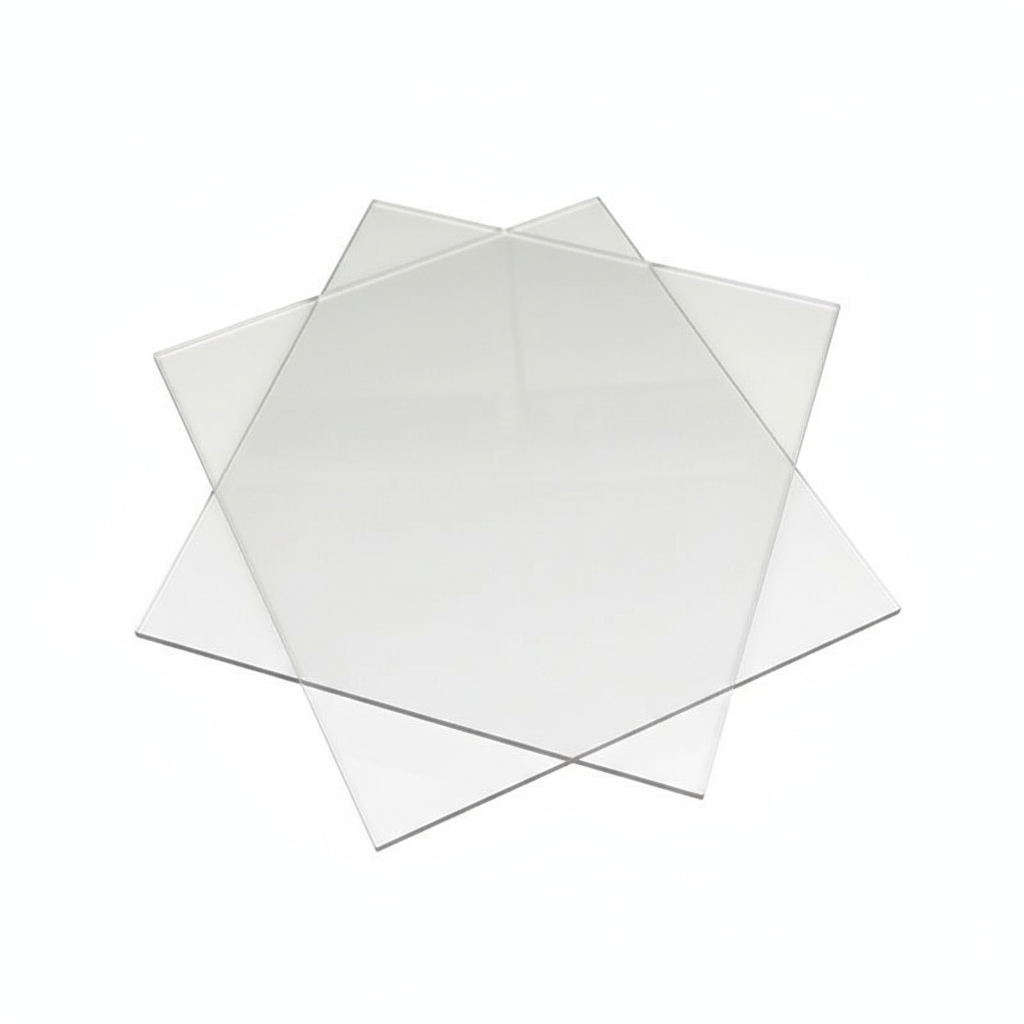
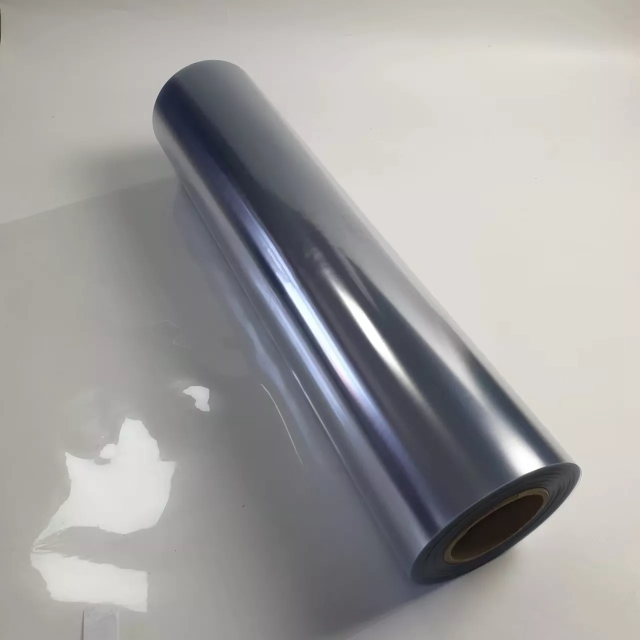
PET and PVC are the two most widely used clear rigid sheet materials in the thermoforming and packaging industry. Both are transparent, thermoformable, and available in a wide range of thicknesses — but they behave differently on your machine, meet different regulatory requirements, and suit different end-use applications.
If you are deciding between PET sheet and PVC sheet for your next project, here is the short answer before we go deep.
Quick Answer: When to Choose PET vs PVC
Choose PET sheet when:you need the highest optical clarity (up to 89% light transmission), FDA food-contact compliance, strong impact resistance, full recyclability (resin code #1), and acceptance in EU/US markets with sustainability mandates. Best for food trays, medical packaging, premium retail clamshells, and any application where clean chemistry and shelf appeal matter.
Choose PVC sheet when:cost per unit is your primary driver, your thermoforming equipment runs better at lower forming temperatures (100–130°C), and your end-market does not have strict environmental restrictions on chlorine-containing plastics. Best for pharmaceutical blisters, stationery packaging, cosmetics inserts, toys, and high-volume commodity packaging.
Not sure yet? Read on — we break down every factor by application below.
PET Sheet and PVC Sheet: Core Material Overview
What Is PET Sheet?
PET (Polyethylene Terephthalate) is a thermoplastic polyester known for outstanding clarity, mechanical strength, and chemical inertness. In rigid sheet form, it is produced by extrusion and comes in several variants. APET sheet (Amorphous PET) is the most common type for thermoforming — it stays non-crystalline during processing, which gives it glass-like transparency up to 89% light transmission. PETG sheet is a glycol-modified variant that forms at lower temperatures and offers better impact toughness, making it popular for deep-draw packaging and medical device trays. One Plastic also offers GAG sheet (a multi-layer APET/PETG structure) and RPET sheet made from post-consumer recycled content.
What Is PVC Sheet?
PVC (Polyvinyl Chloride) has been the workhorse of thermoforming for decades. Rigid PVC sheet is cost-effective, widely available, and offers a forgiving processing window that tolerates variations in mold temperature and cycle time. PVC clear sheet provides good optical clarity with excellent surface gloss for printed packaging. One Plastic's PVC sheet for vacuum forming is engineered for consistent wall thickness on both rotary and flatbed thermoforming machines. The main trade-off is that PVC contains chlorine, which creates recycling challenges and faces increasing regulatory pressure in environmentally sensitive markets.
PET vs PVC Sheet: Head-to-Head Comparison
| Property | PET Sheet (APET / PETG) | Rigid PVC Sheet |
| Transparency | Up to 89% light transmission, glass-like clarity | Good clarity, may carry slight blue/grey tint |
| Thermoforming temperature | 130–160°C (narrower window, requires tighter control) | 100–130°C (wider, more forgiving) |
| Impact resistance | Excellent — no burst on ISO 180 unnotched test | Adequate for standard applications, can crack at low temp |
| Chemical resistance | Excellent, minimal migration risk | Good for most common solvents and weak acids |
| Recyclability | Resin code #1, widely recycled, no chlorine | Technically recyclable but limited curbside acceptance |
| Food safety (FDA) | FDA 21 CFR compliant, widely used in food contact | FDA compliant grades available |
| Heat deflection | Higher (~70°C at 0.45 MPa) | Lower, softens earlier at elevated temperature |
| Unit cost | 15–30% premium over equivalent-gauge PVC | Lower — best value for cost-driven projects |
| Regulatory trend | Preferred in EU, UK, California sustainability mandates | Facing restrictions in some regions (EU SUP Directive) |

PET vs PVC for Thermoforming Trays
Thermoforming trays — for electronics, hardware, food, and medical products — are the single largest application for both PET and PVC sheet. The right choice depends on what you are forming, how fast you are running, and what your customer expects.
PET for thermoforming trays delivers sharper cavity detail, better dimensional stability after forming, and superior impact protection for the product inside. If you are making trays for consumer electronics, fresh produce, or medical devices, APET sheet is the industry standard. The higher forming temperature (130–160°C) requires precise heater zone control, but modern thermoformers handle this without issue.
PVC for thermoforming trays is the go-to when cost efficiency matters more than optical perfection. Its lower forming temperature means faster cycles on many machines, and it tolerates process variations that would cause PET to crystallize (turn white). For thermoformed trays used in hardware kits, stationery inserts, and promotional retail packaging, PVC sheet for vacuum forming delivers reliable performance at a lower material cost.
Bottom line: If your tray needs to look premium on a retail shelf or protect sensitive contents, choose PET. If it is an internal insert or commodity packaging where cost per piece drives the decision, choose PVC.
PET vs PVC for Food Packaging
Food packaging imposes the strictest requirements on material safety, migration testing, and recyclability. This is where the gap between PET and PVC is widest.
PET is the dominant material for food packaging worldwide. It is chemically inert, does not leach plasticizers, carries no odor, and meets FDA 21 CFR and EU 10/2011 requirements without special formulation. Clear PET sheet is used for fruit and vegetable clamshells, bakery containers, deli trays, salad bowls, and meat trays. Its high transparency makes food look fresh and appealing at point of sale. PET is also fully recyclable (resin code #1) and increasingly available in RPET versions with 30–100% post-consumer recycled content — a requirement from major grocery chains and brand owners with sustainability commitments.
PVC is rarely used for direct food-contact packaging in 2026, particularly in EU and North American markets. While food-grade PVC formulations do exist, the material faces growing resistance from retailers, brand owners, and consumers due to chlorine content and recycling challenges. PVC remains common in pharmaceutical blister packaging (where it is sealed with foil and does not directly touch ingestible product) and in non-food retail packaging.
Bottom line: For food packaging, PET is the clear choice on both safety and market acceptance. For pharma blisters, PVC remains the established standard.

APET vs PVC Sheet
This is the most common head-to-head comparison that buyers face when quoting thermoforming projects. APET sheet and rigid PVC sheet compete directly in the 0.2–1.5mm thickness range for packaging trays, blister packs, and folding carton windows.
APET advantages over PVC: higher clarity (89% vs ~85%), better impact resistance, no chlorine, full recyclability, preferred by EU/US sustainability policies, and better chemical inertness for food and medical contact.
PVC advantages over APET: 15–30% lower material cost, wider thermoforming window (easier to process on older equipment), slightly better surface gloss for UV offset printing, and well-established supply chain for pharmaceutical blister packaging.
When APET replaces PVC: We see this shift happening most aggressively in food packaging, premium retail, and any market where the end customer mandates PET-only or chlorine-free packaging. Many European retailers now require PET packaging as a condition of shelf placement.
When PVC holds its position: Pharmaceutical blister packaging (where regulatory qualification of the material is expensive to change), high-volume commodity packaging where 15–30% cost savings matter at scale, and markets without active environmental restrictions on PVC.
PETG vs PVC Sheet
PETG sheet is a glycol-modified PET that bridges the gap between APET and PVC on several properties. Buyers consider PETG when they want PET's environmental profile but need PVC-like processing ease.
PETG advantages: lower forming temperature than APET (closer to PVC's range), excellent impact toughness even at low temperatures, no stress whitening during forming, better compatibility with adhesives and solvent cements, and good sterilization resistance (gamma, ETO) for medical packaging.
PVC advantages over PETG: still lower cost, slightly better dimensional rigidity in thin gauges, and decades of established qualification in pharma blister applications.
Best fit for PETG: deep-draw medical device packaging, point-of-sale displays, applications requiring solvent bonding or gluing, and projects where the customer wants a recyclable alternative to PVC but APET's processing window is too tight for their equipment. Explore One Plastic's PETG sheet options for specifications and thickness availability.
PET vs PVC for Offset Printing and Folding Box Windows
Both PET and PVC sheet are used as window patches in folding cartons and as substrates for offset and UV-offset printing. The choice affects ink adhesion, visual quality, and post-press behavior.
PVC for printing: rigid PVC has long been favored for offset-printed packaging because of its excellent ink receptivity and surface gloss. It lies flat during printing, handles well on automatic feeders, and produces vibrant color reproduction. For printed blister cards, window boxes, and point-of-purchase displays, PVC clear sheet remains a strong performer.
PET for printing: APET and PETG sheets require corona or chemical surface treatment to achieve equivalent ink adhesion. Once treated, PET prints well with UV-cured inks and produces a premium look with higher clarity. PET is increasingly specified for folding carton windows because it is recyclable with the paperboard stream (when properly separated) and aligns with brand sustainability goals.
Bottom line: For short-run, cost-driven printed packaging, PVC still has the edge in ease and price. For brand-owner mandated sustainability or premium visual applications, treated PET is the direction the market is moving.
PET vs PVC for Rigid Display and Point-of-Sale
Point-of-sale (POS) displays, sign holders, counter trays, and display stands use both materials. The deciding factors are structural rigidity, visual quality, and fabrication method.
PET (especially PETG) is increasingly preferred for retail displays because of its superior clarity, scratch resistance, and ability to be solvent-cemented or adhesive-bonded into complex assemblies. PETG sheet in particular excels in display fabrication because it does not crack during routing, bending, or drilling.
PVC remains common for budget displays, sign holders, and temporary promotional fixtures where cost is the deciding factor. Rigid PVC sheet in thicker gauges (2–5mm) machines well and delivers adequate rigidity for countertop and shelf applications.
The Verdict: A Simple Decision Framework
Choose PET when clarity, food safety, recyclability, impact resistance, or regulatory compliance is a priority. PET costs more per kilogram but reduces risk in regulated and sustainability-sensitive markets.
Choose PVC when unit cost, processing forgiveness, and pharma blister qualification are the primary considerations. PVC delivers proven performance at the lowest material cost for high-volume commodity packaging.
Not sure which grade within PET? Use APET for standard thermoforming trays and food packaging. Use PETG for deep-draw, medical, or display applications. Use GAG for multi-layer structures requiring different surface and core properties.
One Plastic manufactures both PET plastic sheet and rigid PVC sheet in our ISO 9001 certified factory. We can quote both materials for the same project so you can make a decision based on real numbers — not assumptions.
FAQ: PET vs PVC Sheet (recommended for FAQPage schema)
Q: Is PET sheet more expensive than PVC sheet?
A: Yes, PET sheet typically carries a 15–30% price premium over equivalent-thickness PVC sheet. However, the total cost picture depends on reject rates, recycling fees, and whether your end-market penalizes non-recyclable packaging. For many food and retail applications, PET's regulatory compliance saves money downstream.
Q: Can I run PET sheet on the same thermoformer I use for PVC?
A: In most cases, yes. The main adjustment is higher heater settings — PET forms at 130–160°C vs PVC's 100–130°C. Modern thermoformers with zone-controlled heaters handle both materials. If you are switching from PVC to PET, we recommend requesting a sample roll for a trial run to dial in your settings.
Q: Which material is better for food contact — PET or PVC?
A: PET is the global standard for food-contact packaging. It is chemically inert, FDA and EU 10/2011 compliant, and does not require plasticizers. While food-grade PVC exists, PET is overwhelmingly preferred by food brands and retailers worldwide.
Q: Is PVC being banned for packaging?
A: PVC is not universally banned, but it faces increasing restrictions. The EU Single-Use Plastics Directive and individual retailer policies are pushing the market away from PVC for consumer-facing packaging. Pharmaceutical blister packaging remains an exception where PVC is still widely accepted.
Q: What is the difference between APET and PETG sheet?
A: Both are PET-based. APET (Amorphous PET) offers the highest clarity and rigidity at the lowest cost within the PET family — best for standard thermoforming. PETG (Glycol-modified PET) forms at lower temperatures, offers better impact toughness, and bonds well with adhesives — best for deep-draw, medical, and display applications.
Q: Can PET or PVC sheet be used for offset printing?
A: Both can be printed. PVC has natural ink receptivity and prints easily with standard offset inks. PET requires corona treatment or a printable coating for proper ink adhesion, but produces excellent results with UV-cured inks. For printed folding box windows, the market is trending toward PET due to recyclability requirements.
Q: Does One Plastic supply both PET and PVC sheet?
A: Yes. One Plastic is an ISO 9001 certified manufacturer producing both PET sheet (APET, PETG, GAG, RPET) and PVC sheet (clear, grey, rigid, vacuum forming grades) from our factory in Changzhou, China. We supply to 300+ clients in 50+ countries.
Q: How do I get samples to test on my thermoformer?
A: Request a free sample through our website. Specify your material type, thickness range, and forming application, and our team will send sample rolls with recommended processing parameters.
Get a Quote for PET or PVC Sheet — Or Both
Not sure which material fits your project? Send us your specifications and we will quote both PET and PVC options so you can compare on real pricing, lead time, and certifications.
→ Request a Quote — Include your material type, thickness, width, annual volume, and end-use application. We respond within 24 hours.
→ Request Free Samples — Test PET and PVC sheet side by side on your thermoforming line before committing.
→ Email us directly: operation@one-plastic.com
One Plastic is a leading PET and PVC plastic sheet manufacturer based in Changzhou, Jiangsu, China. ISO 9001 certified with 10 PET production lines and monthly capacity exceeding 5,000 tons. Learn more about our factory.